

New product · May 12, 2025
New Eco Anchor mooring line from recycled fibres
A sustainable choice for anchoring — strength and reliability with respect for the environment.
An anchor rope is one of the most heavily stressed pieces of equipment on board. It has to withstand shock loads as the boat swings on a wave, resist abrasion against fairleads and the seabed, endure sun and salt water — and still retain the elasticity that protects the anchor gear and the boat itself. Until now, only new, virgin fibre was thought to meet such demands. Our new Eco anchor rope shows there is another way.
Eco anchor is made from a recycled polyester-based fibre. From a sailor's point of view it behaves like a conventional anchor rope: it has the strength and abrasion resistance you expect from an anchor line, and the gentle elasticity that absorbs shock loads when anchoring. The difference lies in the origin of the material — and hence in the environmental footprint. Fibre that would otherwise end up as waste gets a second life exactly where we place the highest demands on it.
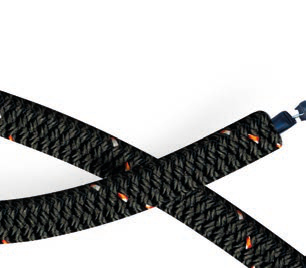
Eco Anchor
Anchor line with a recycled-fibre core — the eco choice.
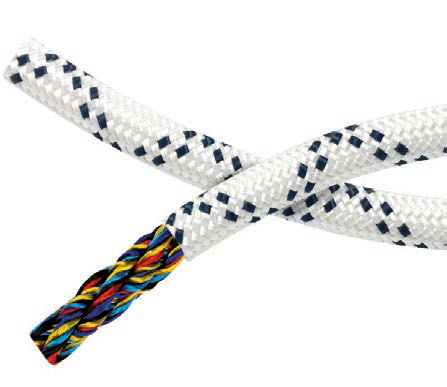
Eco rope
Mooring line with a nylon core — elastic and with a very long service life.
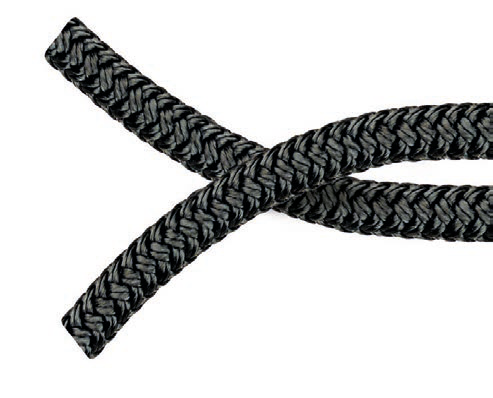
Flexon
Highly elastic polyamide anchor line for shock absorption.
We offer the rope in 12 and 16 mm diameters, covering common recreational sailing yachts from smaller cabin boats to yachts around twelve to fourteen metres. The recommended diameter for a specific boat can be found in our Boat selector, where anchor and mooring lines are derived from hull length. Choose the length of your anchor rope according to the depth of the anchorages you sail in — usually five to seven times the depth.
Eco anchor is not a one-off experiment but the first step in a long-term direction. We want to introduce more sustainable materials gradually across the range wherever this does not compromise the rope's performance. The anchor rope was a logical place to start: it is a product where the properties of recycled fibre can be verified well in real use, and where customers are looking for a responsible alternative.
If you are thinking about replacing your anchor rope before the new season, take a look at the Eco anchor product page with its table of diameters, breaking loads and weights, or contact us via the contact form. We will gladly advise you on the length and diameter for exactly your boat and your anchorages.
An anchor rope deserves a little care to serve for a long time, too. After anchoring in sand or mud, rinse it before stowing — fine particles otherwise work inside the cover like sandpaper. Where the rope runs over the bow fairlead or an edge, use chafe protection (a guard or a piece of hose): that is where most damage occurs. Check the end at the anchor regularly and, at the first signs of fraying, cut off the affected section — which is why it pays to buy the rope with some spare length. And remember a solid termination: a spliced eye or a quality end fitting holds markedly better than a knot, which weakens the rope at the point where it tightens.