Halyards
Dyneema or polyester? How to choose the rope material
The two most common fibres on deck and two different philosophies. When Dyneema is worth the investment and where polyester does the same job for a fraction of the price.
What Dyneema is and why it costs more
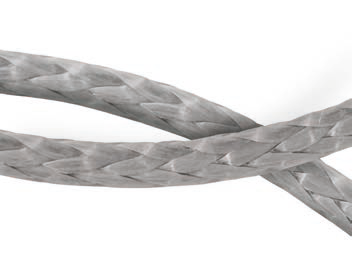
Dyneema is the trade name for an ultra-high-molecular-weight polyethylene fibre (HMPE). At the same diameter it is many times stronger than polyester, barely stretches, weighs little, floats and resists UV and abrasion very well. It has two weaknesses: it is slippery, so it does not hold knots and has to be spliced, and it is sensitive to heat from friction, for example in an overloaded block. The high price reflects demanding fibre production. The same fibre family includes Nexsteel, an HMPE core that LANEX tested and stabilised for sustained loads.
What polyester does well
Polyester is the workhorse of the deck. It has good strength, low stretch once pre-stretched, excellent UV and abrasion resistance, holds knots well and is affordable. It does not float and is heavier than Dyneema, which does not matter for sheets and mooring lines. Most of our ropes have a polyester cover precisely because it protects the core and gives the rope the grip that HMPE alone lacks.
The most common solution: core and cover
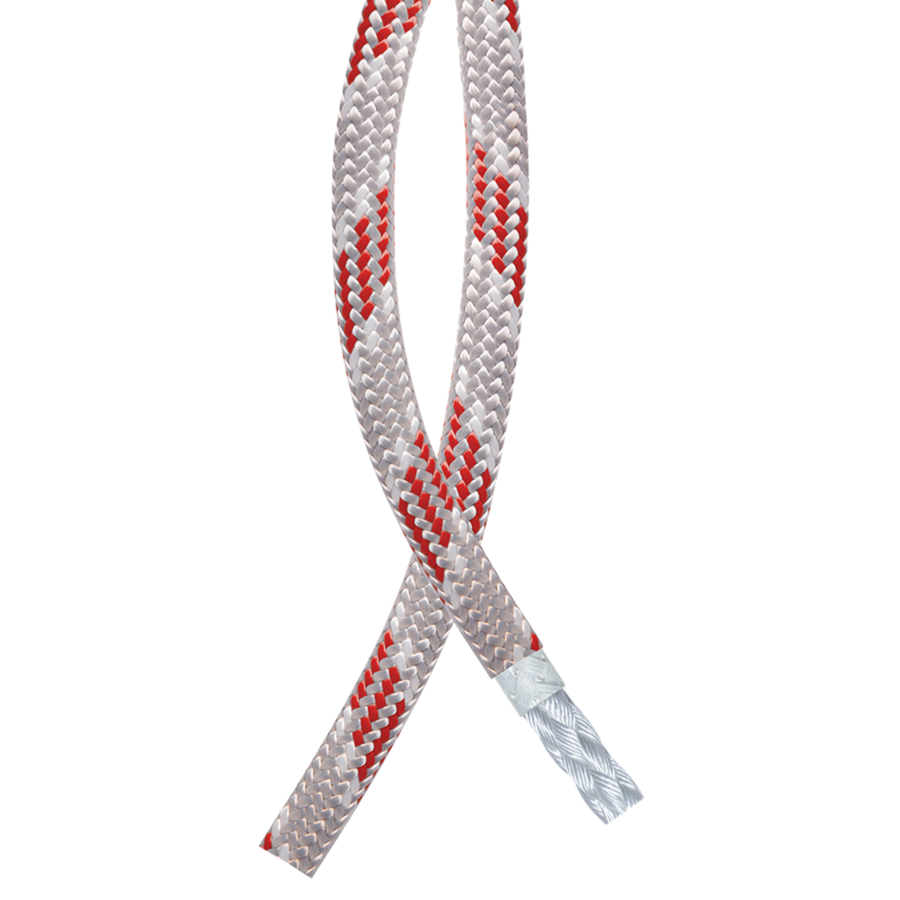
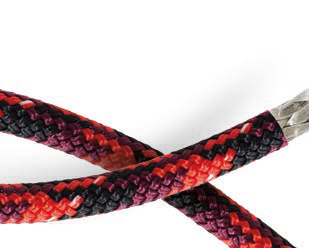
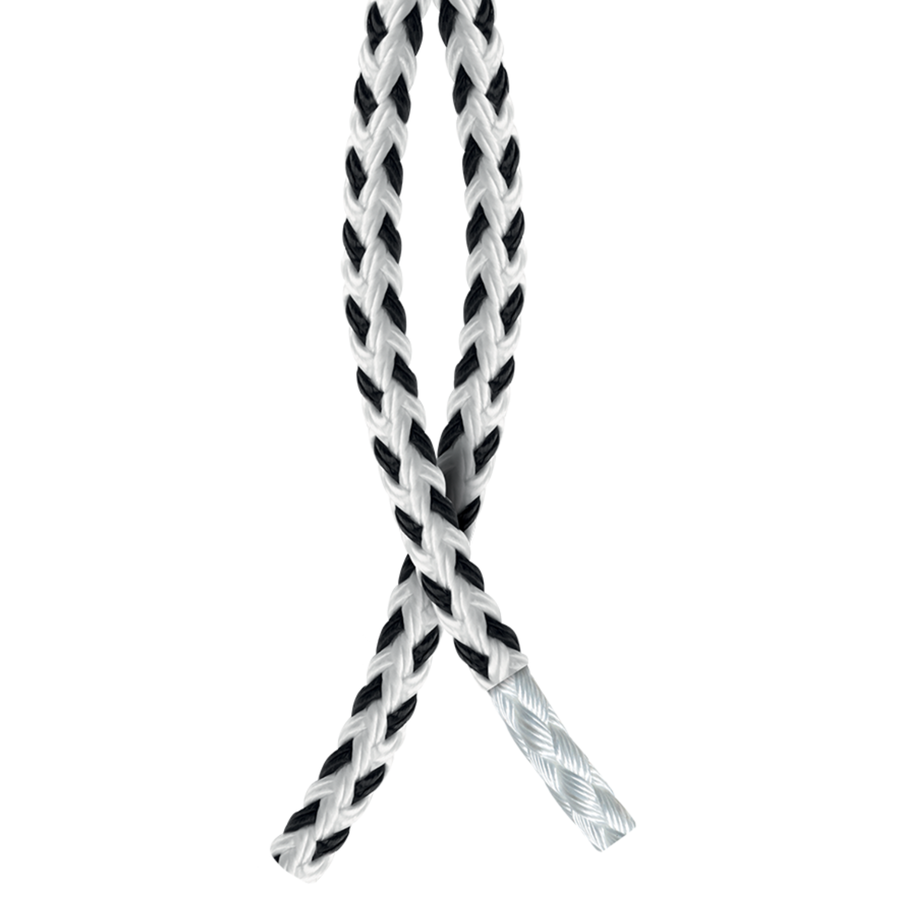
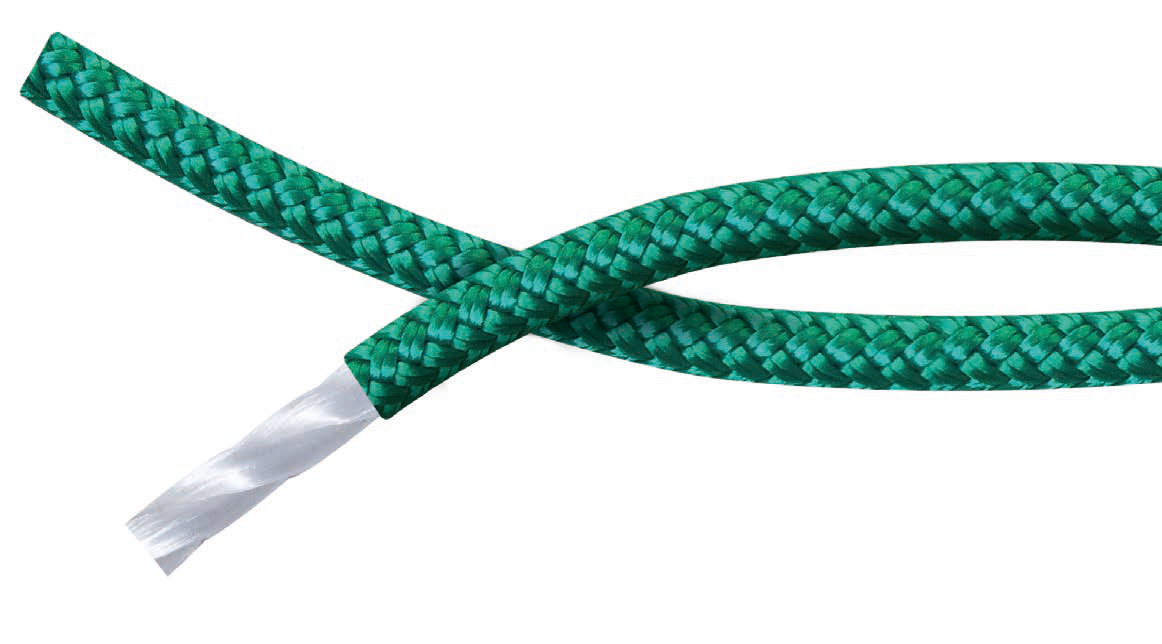
In practice the two fibres are combined. A halyard with a Dyneema or Nexsteel core and a polyester cover unites the strength and zero stretch of the core with the grip and durability of the cover. That is exactly how Mistral or Dynestorm are built. Pure Dyneema twelve-strand ropes such as DF 2 or D-race belong on racing boats, where every gram counts and ropes are spliced, not knotted.
When to reach for Dyneema
For halyards, especially main and genoa, where stretch directly spoils sail shape. For racing sheets and control lines where you want instant response. For textile standing rigging in Dyneema DM20 as a replacement for wire. And for soft shackles and lashings, where strength and low weight replace metal.
When polyester is enough
For the sheets of cruising boats, where grip and price decide. For the control lines of smaller sailboats. For mooring lines, where a little elasticity is welcome, and for every position where you tie the rope in knots. For anchoring, prefer polyamide, which absorbs shock loads even better.
Price and lifespan
Dyneema costs more but lasts longer and allows a thinner diameter, so the price difference is usually smaller than it seems. Polyester is cheaper to buy and lasts many seasons with proper care. A good strategy for a cruising boat is to invest in Dyneema where it shows most, the halyards, and fit the rest of the deck with quality polyester.
Not sure?
Pick your boat for diameter and length recommendations for every position, or get in touch.
Frequently asked questions
Does Dyneema hold knots?+
Poorly; the fibre is slippery and knots untie under load or weaken the rope considerably. Dyneema ropes are finished by splicing, for example with an eye or a soft shackle.
Is Dyneema UV resistant?+
Yes, its UV resistance is excellent, like polyester. Its weakness is heat from friction, so Dyneema ropes do not belong in blocks that slip or jam.
What is the difference between Dyneema and Nexsteel?+
Both are HMPE fibre. Nexsteel is a core that LANEX tested and upgraded for stable sustained loads; we use it in Dynestorm, Mistral, Levante or Zero Plus.