
Lazy jack
Light line for attaching a lazy bag (mainsail stowage bag).
Overview
Technical parameters
| Diameter | Breaking load | Weight | Colours |
|---|---|---|---|
| 4 mm | 370 daN | 0.74 kg / 100 m | |
| 6 mm | 840 daN | 2.3 kg / 100 m |
Material and construction in depth
Core · Polyester
The all-round fibre: good strength, low stretch (pre-stretched) and excellent UV and abrasion resistance; it sinks, holds knots well and is affordable. It's the basis of most of our ropes — as the cover of halyards and as the whole rope for sheets, control and mooring lines (Laguna, Mistral, Hurricane, Vision).
Construction
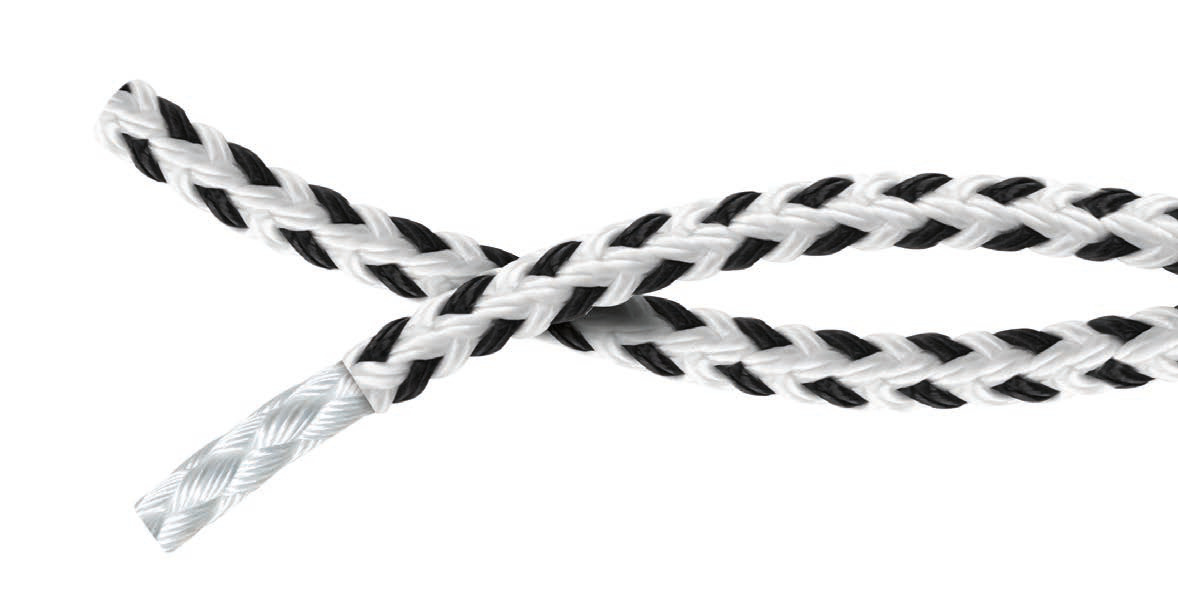
A hollow braid with no core, usually HMPE. Very strong, minimal stretch and easy to splice — typical for racing halyards, soft shackles and lashings.
Read in the Rope guide
Dyneema or polyester? How to choose the rope material
The two most common fibres on deck and two different philosophies. When Dyneema is worth the investment and where polyester does the same job for a fraction of the price.
How to measure the ropes on your boat and when to replace them
Simple formulas for halyard and sheet length that you can work out from the sail dimensions, and seven signs that a rope is due for replacement.
Recommended use
Materials and construction
- Construction
- 12-strand braid
- Core
- Polyester
- Suitable for
- Cruising yachts, Racing yachts
- Available colours
References & partnerships
Why Lanex Yachting?
Sponsorships, brand ambassadors and words from our partners.
17,000 miles with a family and a Class 40
I like the feel of the Dynestorm. It isn’t prone to kinking and it runs well, with a softer feel than many high-performance lines. It’s also quieter when I release the runners, so not everyone has to wake up after the tack.