
Mariner
Versatile polyamide rope for everyday use on deck.
Overview
Technical parameters
| Diameter | Breaking load | Weight | Colours |
|---|---|---|---|
| 2 mm | 170 daN | 0.3 kg / 100 m | |
| 3 mm | 240 daN | 0.7 kg / 100 m | |
| 4 mm | 470 daN | 0.9 kg / 100 m | |
| 5 mm | 650 daN | 1.6 kg / 100 m | |
| 6 mm | 950 daN | 2.7 kg / 100 m | |
| 8 mm | 1300 daN | 4.5 kg / 100 m |
Material and construction in depth
Core · Polyamide (nylon)
Polyamide is the most elastic of the common fibres — it absorbs shock loads and has high strength and abrasion resistance, losing a little strength when wet. That makes it ideal for anchor and mooring lines (Eco rope, Flexi dock, Flexon, Mariner).
Cover · Polyamide (nylon)
Polyamide is the most elastic of the common fibres — it absorbs shock loads and has high strength and abrasion resistance, losing a little strength when wet. That makes it ideal for anchor and mooring lines (Eco rope, Flexi dock, Flexon, Mariner).
Construction
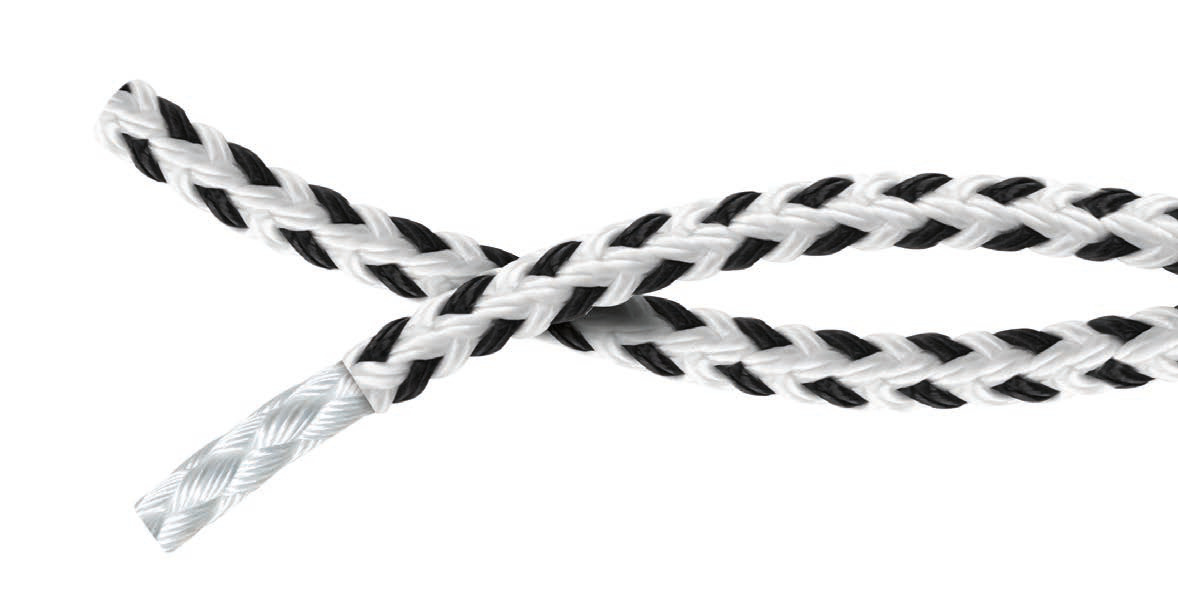
A load-bearing core (HMPE or polyester) protected by a cover (polyester, Cordura®, Technora®). The cover provides grip and protects against abrasion and UV — the most common construction for halyards and sheets.
Which diameter for your boat
Indicative diameter by hull length for the positions this rope is made for. The Boat selector shows the exact value for your model.
Read in the Rope guide
Dyneema or polyester? How to choose the rope material
The two most common fibres on deck and two different philosophies. When Dyneema is worth the investment and where polyester does the same job for a fraction of the price.
How to measure the ropes on your boat and when to replace them
Simple formulas for halyard and sheet length that you can work out from the sail dimensions, and seven signs that a rope is due for replacement.
Recommended use
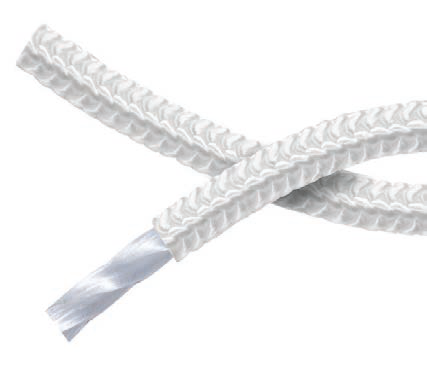
Materials and construction
- Construction
- Double braid (core + cover)
- Core
- Polyamide (nylon)
- Cover
- Polyamide (nylon)
- Suitable for
- Cruising yachts
- Available colours